It defines, lengthens and tends not to smudge: tubing mascara envelops the lashes with a thin polymer film. Let’s find out what it is, how it works, how to remove it and why it can be interesting even after the age of 50.
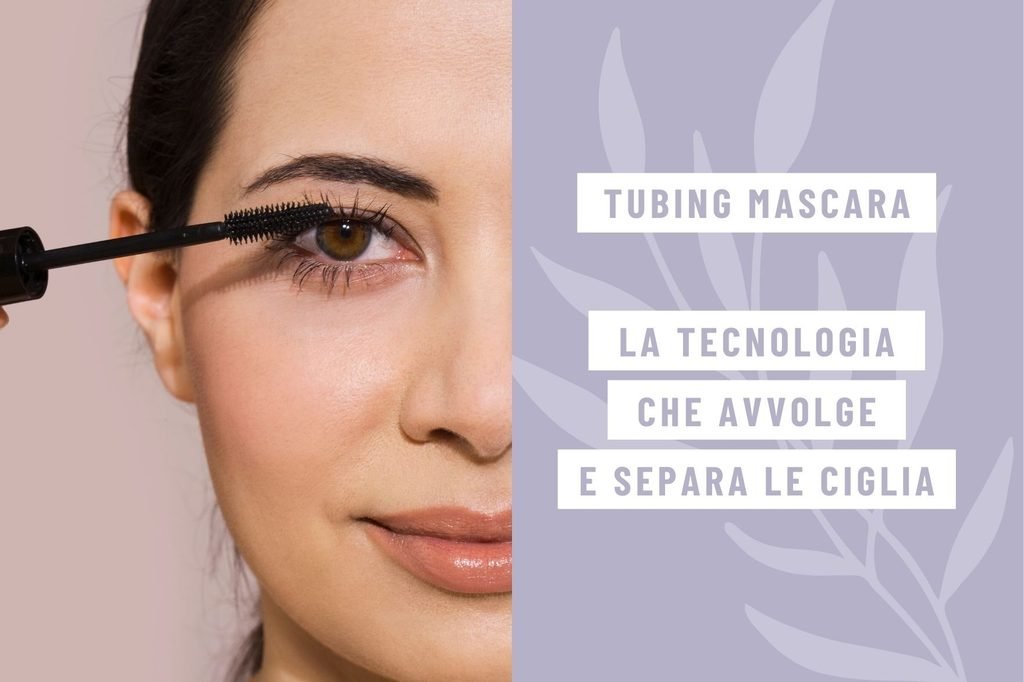
Do we no longer like the effect of mascara on the eyes as much as we used to? Maybe it’s not the fault of the mascara, but of our eyelashes that have become thinner, less thick, less visible. So it can happen that, after a few hours, that perfectly applied mascara leaves a trace on the upper eyelid or small residues under the eye.
That’s why tubing mascara can also be particularly interesting for women over 50.
Its peculiarity? The film-forming polymers present in the formula create a thin coating around the lashes which, once dry, helps to define and separate them.
One of the reasons tubing mascara is interesting is precisely its tendency to transfer and smudge less than many traditional formulas.
It is not an absolute guarantee and not all products behave the same.
But for those who struggle with smudges on a daily basis, it’s a feature worth considering.
But how exactly does tubing mascara work? And above all: is it really suitable for mature eyelashes?
For those looking for a mascara after the age of 50 that favors definition, length and smudge resistance, tubing technology can therefore be an interesting alternative to traditional formulas.
Tubing mascara: what is it and how does it work?
Let’s start with the simplest thing. The name “tubing” derives from the way mascara behaves on the lashes: the polymers present in the formula form, once dry, a sort of small coating around each individual lash, almost as if they were “tubes”.
Traditional mascara, on the other hand, deposits a mixture of pigments, waxes, oils, polymers and other ingredients on the surface of the lashes that help create volume, color, curl or length.
In tubing mascara, the polymer film therefore plays a central role.
How does tubing mascara work?
During application, polymers are distributed along the lashes. When the product dries, they form the characteristic coating.
Each lash thus tends to remain more separate from the others, helping to create a defined and orderly effect.
When we talk about mascara after the age of 50, a good definition can be particularly interesting.
The goal, in fact, is not necessarily to apply more product, but to distribute the mascara better and precisely separate the lashes.
Not all tubing mascaras are created equal
Some focus mainly on elongation, others on definition, others also try to offer volume or curvature.
For this reason, the word “tubing” alone is not enough to understand what result we will obtain.
Tubing mascara after 50: 3 reasons to try it
1. Defines without necessarily weighing down
When lashes are thin or less thick, a good separation can enhance them more than an excessive layering of product.
The final effect can be cleaner and more refined, especially in everyday make-up.
2. It can give a lengthening effect
Many tubing mascaras are especially appreciated for their ability to emphasize length.
Well-separated and visually longer lashes can help to open up the eyes, without resorting to more intense volume.
3. It can reduce the problem of burrs
It’s probably the most curious advantage.
The film that surrounds the eyelashes tends to remain more stable and transfer less easily to the skin.
For those who easily notice transfers of mascara on the eyelid, this characteristic can make a real difference in everyday life.
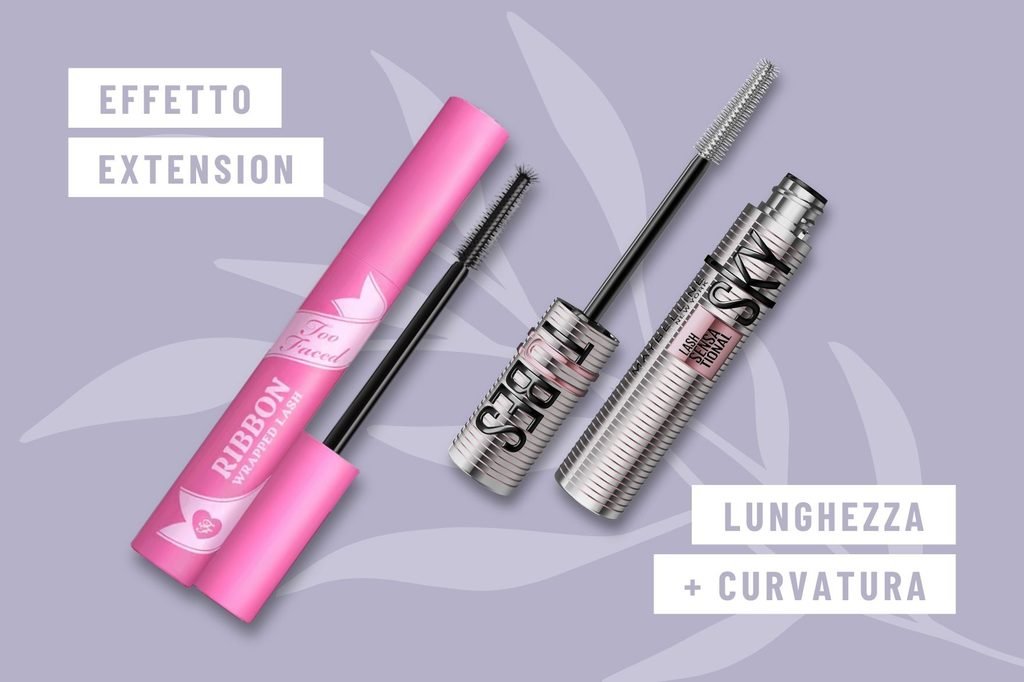
and Lash Sensational Sky Tubes Mascara by Maybelline New York.
Tubing mascara and traditional mascara: which one to choose?
There is no winner. They are simply two systems that can respond to different needs.
Tubing mascara is particularly interesting when we are looking for:
separation + definition + length + transfer resistance.
If, on the other hand, we are looking above all for a very intense volume or a particularly dramatic effect, a traditional formula designed specifically for that result may be more suitable.
In other words: let’s not choose mascara because it’s tubing. Let’s choose it because it’s what gives us the effect we want.
Tubing mascara: how do you remove it without rubbing your eyelashes?
In many tubing formulas, warm water and gentle pressure help the coating slide off the lashes into small filaments or “tubes.”
The procedure must always be delicate:
1. Moisten the lashes with warm water.
2. Let the water sit for a few seconds.
3. Apply light pressure with your fingertips.
4. Gently slide the cover off.
5. Rinse.
The fundamental rule? Do not pull or rub. The ease of removal does not mean that the product should be “plucked” from the lashes.
Tubing mascara and waterproof: are they the same thing?
Not necessarily. And it is an important distinction.
Let’s not confuse:
- Smudge-resistant
- Water resistant
- waterproof
The fact that tubing mascara tends not to transfer easily to the eyelid does not automatically mean that it is waterproof.
If we are looking for a mascara for the sea, sports or situations in which we will frequently come into contact with water, we must therefore check the specific indications of the product.
Is tubing mascara volumizing?
Again, it depends on the formula.
Tubing mascara is often associated with length and definition, but there are mascaras that are also designed to increase volume.
If the lashes are thin or not very thick, it may be useful to favor a brush that separates them well and a formula capable of visually emphasizing their length.
If, on the other hand, the desire is a very intense look, with great volume, a traditional specifically volumizing mascara may be more suitable.
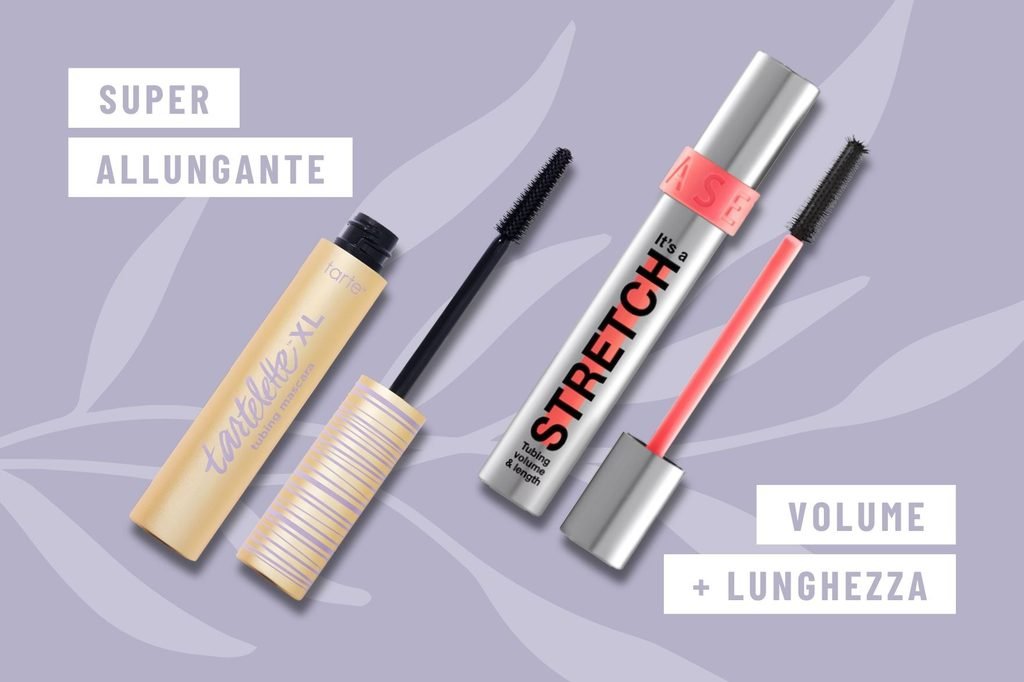
and It’s a Stretch Tubing Volume & Length by Sephora Collection.
How to apply tubing mascara on mature eyelashes?
A basic rule applies here: less product, better applied.
First we can comb the eyelashes and, if desired, use the eyelash curler.
Then we place the brush at the base of the lashes and proceed towards the tips with small movements, trying to distribute the product evenly.
On the outer lashes we can insist slightly more to help open the eyes.
On the lower lashes, on the other hand, it is better to use a light hand. And above all, beware of too many coats.
If we are looking above all for definition and separation, it is better to build the result gradually without overloading the eyelashes.
Tubing mascara: advantages and limitations to know
Let’s talk about it, because a good beauty product does not need to be told as a revolution.
The tubing mascara:
- it does not always offer spectacular volume;
- it is not necessarily waterproof;
- it does not always have the same ease of removal;
- It can leave a sensation on the lashes that not everyone loves.
And above all:
“Tubing” doesn’t automatically mean “better.”
It simply means that the product uses a particular system to coat the lashes.
The choice depends on the type of eyelashes, the desired result and personal make-up habits.
Beauty’s Angels tip
We told you about tubing mascara because it offers a different way to enhance the lashes:
Less mass effect, more definition.
Fewer layers, more attention to the individual lashes.
And perhaps this is precisely the reason why it can make sense in the beauty case of the over 50s.
When eyelashes change and the way we like to make up our eyes also changes, we don’t always need a more intense mascara: sometimes we simply need a formula that is more suitable for the result we are looking for.
If you are interested in the topic of eye makeup over 50, you might also like these articles from our blog:
- Drooping eyelid after 50: the trick to have a more open and youthful look
- Smoky eyes in autumn: do you prefer it more classic or more whimsical? The word to the over 50s!
- The well-being of the eyes: eye contour, eyelashes, make-up
From the Maybelline New York website, we propose: Techniques on how to apply mascara for a perfect look
FAQ – The most frequently asked questions about tubing mascara
1. Is tubing mascara suitable for women over 50?
Yes, it can be interesting after the age of 50, especially if you are looking for definition, separation, length and a formula that tends to transfer less. Age, however, is not enough on its own to determine which mascara is most suitable.
2. Is tubing mascara better than traditional mascara?
Not always. The two types can offer different results. Tubing is particularly interesting for definition, separation and transfer resistance; traditional mascara may be preferable for some volumizing or more dramatic effects.
3. Is the tubing mascara waterproof?
Tubing, water-resistant and waterproof are not synonymous. You should always check the indications of the individual product.
4. Why does tubing mascara tend not to smudge?
The polymer coating typical of tubing formulas is designed to adhere to the lashes and tends to transfer less easily to the skin than many traditional formulas.
5. How do I remove the mascara tubing?
Many tubing formulas are designed to be removed with warm water and gentle pressure on the lashes. It is still important to follow the instructions of the individual product and not to pull or rub vigorously.
6. Can tubing mascara damage your eyelashes?
As with any mascara, it is important to apply and remove it properly, without pulling on the eyelashes. If the product causes irritation or discomfort to the eyes, it is best to stop using it.
7. Does tubing mascara give volume to the lashes?
It depends on the formula. Some products are designed primarily to lengthen and define, others are also formulated to increase volume.
8. Can you use tubing mascara on the lower lashes?
Yes, but it is advisable to apply a small amount and work precisely, especially if the eye area tends to stain easily.
Generative AI tools have been used for this article to support the content structure. Texts, evaluations and choices on the beauty treatments published are always edited and revised by the editorial staff of Le Beauty’s Angels.