
Dear over 50s, if you find your hair on the pillow, on the brush or in the shower…. know that for several years now, and especially in autumn, I (Angela) have been asking myself the crucial question: “Am I losing too much hair?”.
I must confess that my hair, genetically not very gifted, has always been fragile and not very voluminous. Over time, without its loss becoming an obsession, I have taken care of it perhaps with even more attention to the skin and, at my age (I was born in ’56), I cannot complain about my hair!
As a veteran of the problem, I wrote this article hoping that it will be useful to you.
Let me tell you right away that hair loss in women can become more evident at certain times of the year, including autumn. A certain seasonality of the hair cycle has also been observed in the scientific literature, but this does not mean that every increase in hair loss is automatically “seasonal” or that it depends solely or also on menopause.
The most useful distinction is another: are we temporarily losing more hair than usual or is the hair progressively losing density? In the first case, it may be a transitory phenomenon; in the second, it is important to look for the cause.
Before choosing yet another anti-fall vial, therefore, it is worth stopping for a moment and taking a closer look at what is happening. Understanding the problem comes before the product.
After the age of 50, distinguishing between temporary increase in hair loss and progressive loss of density helps to understand when it is enough to observe the evolution and when it is better to ask for a dermatological evaluation.
IN BRIEF — What You Need to Know
It can happen: the hair cycle shows a certain seasonality, but not all autumn falls have the same cause.
Age and hormonal changes can contribute, but genetic predisposition, stress, disease, weight loss, deficiencies and certain medications also count.
No. Seeing more hair in the shower does not necessarily equate to having progressively less hair on your head.
If the hair loss persists, the volume decreases, the line widens, patches appear or the scalp has persistent symptoms, it is advisable to consult a dermatologist.
- Women’s hair loss: seasonal or thinning?
- Why we can lose more hair in autumn
- Hair loss in women after 50: what really changes
- Menopause and hair: how important hormones are
- Anti-hair loss treatments: when they can be useful
- Mistakes to avoid when hair falls out
- Women’s hair loss:when is it best to consult a dermatologist
- Hair loss: the editorial staff’s cosmetic choices
- Beauty’s Angels tip
- FAQ about hair loss in women after 50
Women’s hair loss: seasonal or thinning?
The first thing to observe is not only how much hair remains on the brush, but how the hair as a whole is changing. An increase in hair loss for a few weeks may be compatible with a transitory phenomenon; a progressive reduction in volume, on the other hand, deserves different attention.
The American Academy of Dermatology indicates that a rough loss of about 50-100 hairs per day is normal, but in real life counting them one by one is of little use. It is often more useful to compare the situation with one’s normality: is the tail less full-bodied? Is the parting wider? Is the scalp more visible? American Academy of Dermatology.
What to observe in practice
If it happens for a few weeks, it may be a temporary increase in the fall, especially if the situation then gradually tends to recede.
If the line appears progressively wider, it can be a sign of reduced density and deserves more attention.
A tail that appears thinner over time can indicate a decrease in the overall volume of the hair.
When the scalp has symptoms that do not go away, it is useful not only to focus on the amount of hair lost but also to evaluate the health of the skin.
Why we can lose more hair in autumn
The hair goes through a biological cycle consisting of several phases. During anagen it actively grows; this is followed by a short transition phase, the catagen, and finally the telogen, the resting phase that precedes the detachment of the hair.
A study of 823 women observed an annual periodicity of the cycle, with a higher proportion of telogen hair during the summer. This may help explain why some people notice an increase in hair loss between late summer and early fall.
But seasonality must not become an automatic explanation. If the situation is very different from usual, lasts a long time or is accompanied by an evident thinning, attributing everything to autumn risks wasting our time.
Telogenic effluvium: when the fall increases after stress
Telogenic effluvium is a form of increased diffuse hair loss that can be temporary: a greater number of follicles enter the telogen phase and, after a certain interval, more hair loss than usual is noticed. DermNet: telogen effluvium.
Possible associated factors include, for example, diseases with fever, surgery, severe stress, significant weight loss, very restrictive diets, thyroid alterations and certain medications. What we see falling today can therefore tell something that happened some time ago.
Hair loss in women after 50: what really changes
After the age of 50, it is possible to notice thinner, less full-bodied hair or less vigorous growth, but there is no rule that all women should lose density. Age, genetics, hormones, and overall health can be intertwined in different ways from person to person.
Female pattern hair loss often tends to be gradual: the central parting may appear wider and the density at the top of the head may decrease progressively. DermNet also points out that this condition should be distinguished from chronic telogen effluvium, because causes and management are not overlapping. DermNet in-depth study on female pattern hair loss.
If you want to learn more generally about how the hair fiber changes with age, on our blog you will also find the Hair care routine over 50 for thin, dry and brittle hair, with indications dedicated to the daily management of mature hair.
Menopause and hair: how important hormones are
The most correct answer is this: hormones can contribute, but they do not explain everything. Hair loss according to the female pattern has an important genetic component and can also appear in women with normal hormonal values.
The relationship between estrogen, androgens and hair growth is more complex than the formula “estrogen decreases, hair falls out”. DermNet reports that female pattern hair loss is more common after menopause, but also points out that the role of estrogen is not fully understood.
This is why I prefer to avoid a fatalistic reading: menopause does not automatically mean thinning hair. If you also want to recover the point of view of dermatologist Magda Belmontesi, you can read our in-depth study Hair loss in menopause.
Anti-hair loss treatments: when they can be useful
And here we come to the beauty question: are anti-hair loss ampoules and serums really necessary? They can play a role in the cosmetic routine, but only if we know what we are asking of the product.
A cosmetic can be formulated to take care of the scalp, improve the appearance of the fiber, give a feeling of greater body or accompany the routine in periods of greater fragility.
The American Academy of Dermatology also insists on a simple principle: in order to properly deal with real hair loss, it is important to identify the cause. AAD: Overview of the causes of hair loss.
How to choose a cosmetic treatment with more criteria
- If the loss appears temporary and coincides with a seasonal period, it may make sense to maintain a gentle and constant routine, without overloading the scalp with too many products.
- If the hair loses density , the cosmetic product should not become a way to postpone a dermatological evaluation.
- If you start a treatment , respect the methods and times of use indicated, avoiding judging it after a few days.
The rule we like best? Consistency counts more than initial enthusiasm. Hair has a long biological time, and a sensible routine is almost always more helpful than a sequence of impulsive attempts.
Mistakes to avoid when hair falls out
- Constantly changing products. Jumping from one vial to another also prevents you from understanding what you are really using and with what consistency.
- Be convinced by the most spectacular claim. Words such as “regrowth”, “stop the fall” or “immediate density” should always be read critically and in the context of the formula.
- Thinking that more product means more result. Quantity and frequency must be those provided by the manufacturer: exceeding does not automatically make the treatment more effective.
- Neglecting the scalp. Persistent itching, irritation, pain or peeling deserve attention and should not be covered by an increasingly complex routine.
- Attribute it all to age or menopause. This is perhaps the most important mistake: hormonal changes can have an impact, but they are not the only possible explanation.
If you are interested in learning more about skin care, you can also read our article dedicated to how to take care of the scalp microbiome, within the Hair section of Beauty’s Angels.
Women’s hair loss:when is it best to consult a dermatologist
There is no need to wait for the situation to become dramatic. A specialist assessment is particularly useful when the fall persists over time or visibly changes the density of the crown.
The central parting becomes progressively wider and the scalp is more visible.
Over time, the tail appears thinner and the overall volume of the hair decreases.
Localized areas appear where the density is significantly reduced or the hair is absent.
The situation does not tend to improve and hair loss continues over time.
The scalp has persistent symptoms, such as irritation, pain, or flaking.
The situation appears quickly or generates concern because it is not clear what is causing it.
Five questions to ask yourself before buying another product
1. Am I losing more hair than usual or do I see less hair on my head at all?
2. Has the drop appeared suddenly or has the density been slowly decreasing for months?
3. Is the loss widespread or do I notice a change in the parting and upper part of the head?
4. In the previous months have I had an illness, fever, severe stress, significant weight loss or other significant changes?
5. Is the situation improving or continues without changes?
If the problem persists, the most useful choice is not necessarily another cosmetic – it may be to understand the cause.
Hair loss: the editorial staff’s cosmetic choices
Important note: Cosmetic treatment is not a substitute for diagnosing the cause of the fall. If thinning is noticeable, the fall persists or progressively sparser areas appear, you should consult a dermatologist.
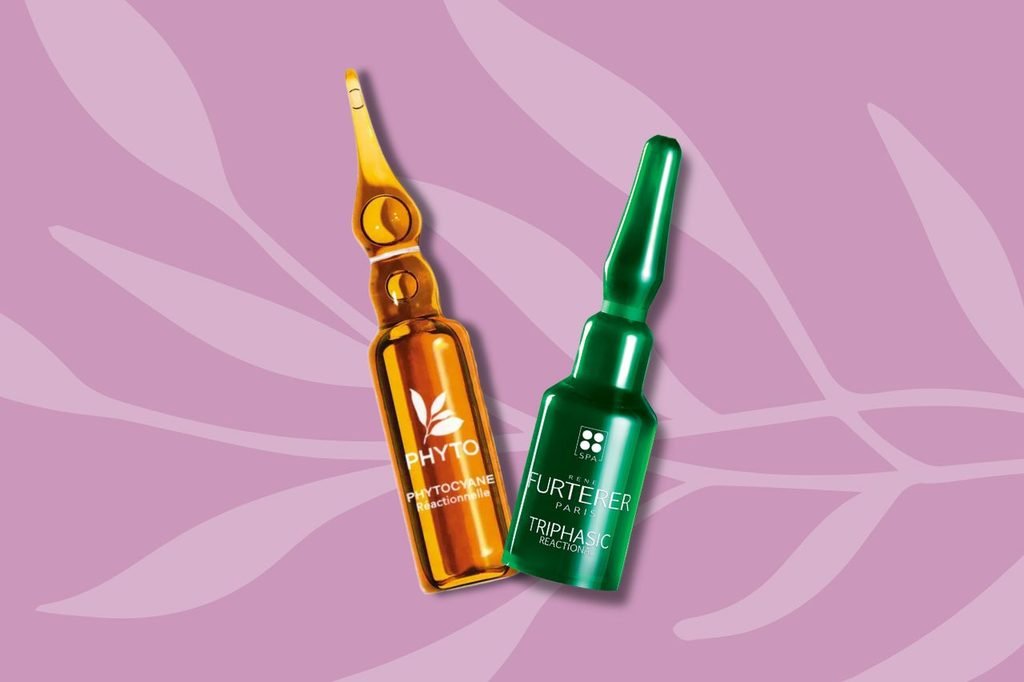
Phyto — Phytociane Reactionelle Intensive+ Women
A cosmetic treatment that the brand offers for periods of reactional hair loss. It can be included in haircare when you want to combine the routine with a specific product, without confusing it with a therapy of the cause of the fall.
René Furterer — Triphasic Progressive Anti-Hair Loss Treatment Longevity & Density
A cosmetic treatment proposed by the brand for an ongoing routine dedicated to hair that appears progressively less dense.
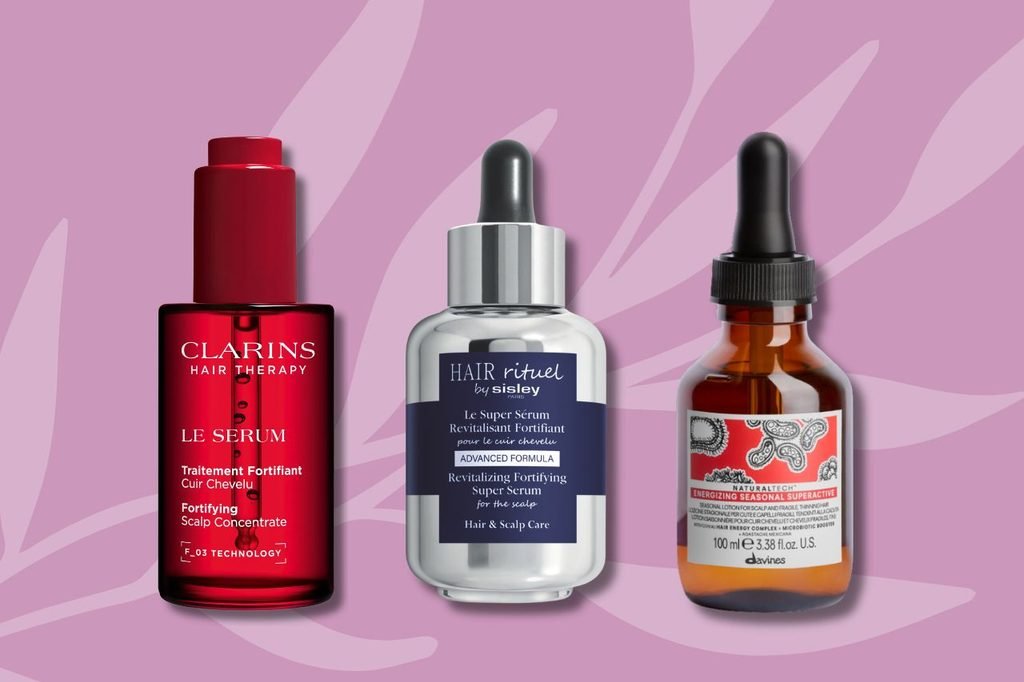
Clarins — Hair Therapy Le Sérum
A cosmetic serum to consider when you want to work on the appearance of strength and vitality of the hair within a constant routine.
Hair Rituel by Sisley — Le Super Sérum Revitalisant Fortifiant
A cosmetic treatment aimed at those who perceive a loss of body and vitality and want to take care of both the scalp and the appearance of the fiber.
Davines — Naturaltech, Energizing Seasonal Superactive
A lotion that the brand offers in periods of greater seasonal fragility, to be included in a regular routine for scalp and hair.
The selection of products makes sense only after clarifying the objective: managing a period of greater cosmetic loss is not the same thing as dealing with progressive thinning.
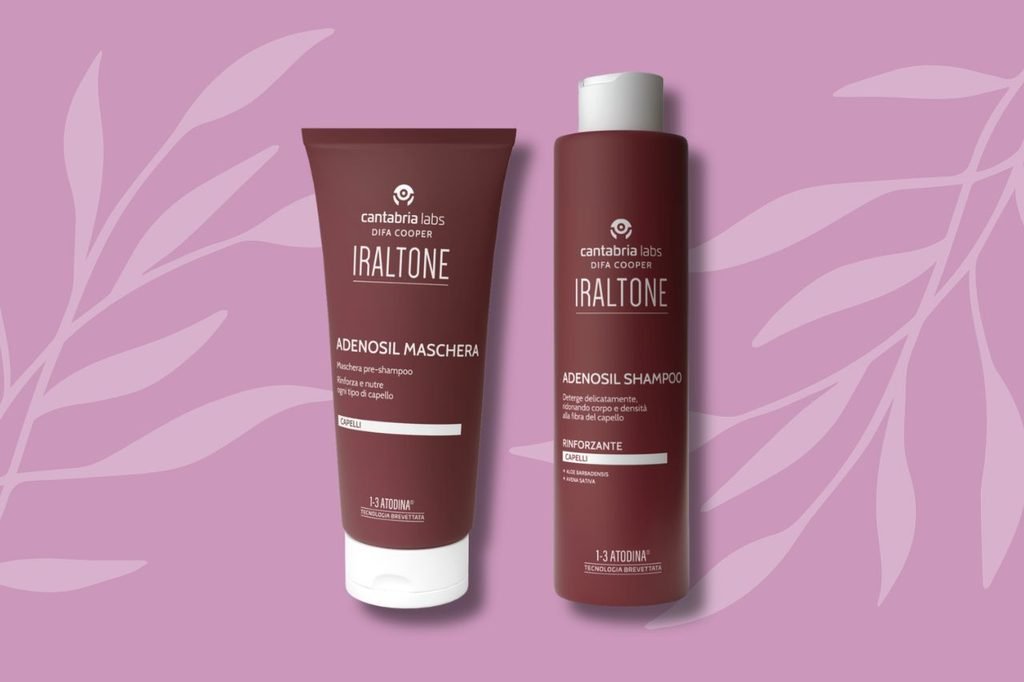
Cantabria Labs Difa Cooper — Iraltone, Adenosil Restructuring Mask that promises to act on damage to the hair shaft caused by cleansing, cosmetic treatments, pollution, UV rays. It has a moisturizing, nourishing and normalizing action. It is applied to the dry scalp and shaft. Leave on for 15/20 minutes and rinse. Then cleanse the hair with shampoo. It is recommended to apply it 3 times a week.
Cantabria Labs Difa Cooper — Iraltitone, Adenosyl Gentle shampoo suitable for all hair types. Designed to give body and density to the fragile hair fiber and to normalize the scalp (helps reduce itching and redness). With Aloe barbadensis and Avena Sativa Extract. For frequent washing.
Both products contain Atodine™ (adenosine, ornithine and taurine), a complex that, according to the brand, is designed to complement treatments dedicated to hair loss and fragility.
Beauty’s Angels tip
When hair seems to fall out more than usual, it is easy to become alarmed and immediately look for a solution. The most sensible advice, especially after the age of 50, is instead to observe the change, avoid hasty conclusions and distinguish a temporary phase from a real loss of density.
Cosmetic care can accompany the hair in periods of greater fragility, but it must not turn into a race for the most promising product. Knowing your hair remains the first gesture of beauty.
For more insights dedicated to mature hair, you can visit our Hair over 50 section.
Generative AI tools have been used for this article to support the content structure. Texts, evaluations and choices on the beauty treatments published are always edited and revised by the editorial staff of Le Beauty’s Angels.
FAQ about hair loss in women after 50
1. Is it normal to lose more hair in autumn?
It can happen. Research has observed a certain seasonality of the hair cycle, with a higher proportion of hair in the telogen phase at certain times of the year. Persistent or thinning hair loss, however, should not be automatically attributed to the season.
2. How much hair is normal to lose each day?
The American Academy of Dermatology indicates that a loss of about 50-100 hairs per day is physiological. In practice, it is more useful to observe if something has changed compared to one’s usual situation, instead of counting them one by one.
3. Does menopause cause hair loss?
Menopause can coincide with changes in hair density and diameter, but not all women experience significant hair loss. Genetics, overall health, and other factors can play an equally important role.
4. What is the difference between telogen effluvium and progressive thinning?
Telogenic effluvium manifests itself mainly with a widespread increase in hair loss and can be temporary. Progressive thinning, on the other hand, leads to a reduction in density, often more evident in the central and upper part of the head.
5. When should you go to the dermatologist for female hair loss?
When the hair loss persists over time, noticeable thinning appears, the parting widens, patches appear or persistent scalp symptoms are present. A situation that generates great concern also deserves professional evaluation.
Generative AI tools have been used for this article to support the content structure. Texts, evaluations and choices on the beauty treatments published are always edited and revised by the editorial staff of Le Beauty’s Angels.


